Friday, June 14, 2013

More Than a Song-and-Dance Man: Three Little Words and The Astaire Story

My wife, Erin, and I recently watched Three Little Words, a Fred Astaire movie that is actually a biopic of the songwriting team of Bert Kalmar and Harry Ruby. This prompted me to do some research into the lives and careers of Kalmar and Ruby, as well as dusting off my copy of Fred Astaire's great 1952 meeting with the Oscar Peterson Trio, The Astaire Story, where Astaire shows, as if proof were really needed, what a fantastic jazz singer he was.

The 1940s saw a proliferation of biopics of songwriters from the Great American Songbook, names by then already legendary like Jerome Kern (Till the Clouds Roll By) and George Gershwin (Rhapsody in Blue). This was also the decade in which Al Jolson's career was revived thanks to two movies that dramatized his life and career, The Jolson Story and Jolson Sings Again, which were box-office hits (particularly the former) and would bring about similar films in the 1950s devoted to other stars such as Gene Krupa, Benny Goodman, Eddy Duchin, Eddie Cantor, Ruth Etting (the superb Love Me or Leave Me, starring Doris Day and James Cagney), and others.

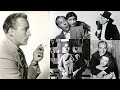
Harry Ruby and Bert Kalmar
In 1950, Metro-Goldwyn-Mayer decided to produce a movie about the popular Tin Pan Alley songwriting team of Bert Kalmar and Harry Ruby. Its title was Three Little Words, and though it is not as well known as the films about Kern, Gershwin, or Jolson, it does feature an extraordinary cast: Fred Astaire and Red Skelton star as Kalmar and Ruby respectively, supported by Vera-Ellen and Arlene Dahl. The result is a hidden gem, an atypical Astaire movie in that his dancing sort of takes a backseat to the music, and also an atypical Red Skelton vehicle in which the comic appears rather subdued and shows that he did have a talent for more dramatic roles. The prominence of the music may well have been one of the reasons that attracted Astaire to the project, since songwriting was one of his unfulfilled passions, and this film offered him the chance to play a professional songwriter. As a matter of fact, in his 1959 autobiography, Steps in Time, Astaire only has positive things to say about Vera-Ellen and the rest of the cast, and notes that he "enjoyed singing the old Kalmar and Ruby hits with Red." Overall, Astaire remembers Three Little Words as "an outstanding film and one of my top favorites. I'd like to be doing it all over again" (296).

It certainly is a delightful little movie, showcasing the great compositions of two talented men who are unfairly overlooked these days and strangely omitted in several book-length studies on Tin Pan Alley and the Great American Songbook. For instance, Alec Wilder does not even mention Kalmar and Ruby in his classic study American Popular Song, and they are not included among the large group of songwriters profiled by William Zinsser in Easy to Remember and by Wilfrid Sheed in The House that George Built. Philip Furia, in his Poets of Tin Pan Alley, briefly discusses the lyrics of their composition "Three Little Words," noting that its melody sets it apart from other Hollywood songs of the period: "Since it consisted of a four-note phrase, it was too long for the three-syllable standard 'I love you'" (236). This critical silence on the work of Kalmar and Ruby seems unwarranted to me, since their partnership produced some of the most popular songs of the 1920s and '30s, simple but very catchy tunes such as "I Wanna Be Loved by You," the moody "Nevertheless (I'm in Love with You)," and "A Kiss to Build a Dream on." Moreover, one of their most successful compositions, the irresistible "Who's Sorry Now," has been recorded by artists as disparate as Connie Francis, Marie Osmond, and Jerry Lee Lewis, to name but three.

As for the movie, one of the main problems that screenwriter George Wells faced was the fact that the lives of Kalmar and Ruby, as well as their songwriting partnership, had been fairly uneventful and badly needed some dressing up. Therefore, even though Kalmar's interest in magic early in life and Ruby's obsession with baseball are reflected in the film, many of the events that make up the plot come courtesy of the typical Hollywood poetic license of the time, that is, they are mere inventions meant to drive the storyline forward. Thus, Kalmar never wrote a serious play whose success on Broadway was thwarted by Ruby's schemes, Kalmar did not begin his songwriting career because of a dancing injury, and Kalmar and Ruby's long partnership never suffered any sort of breakup. More importantly, the song that lends its title to the movie, "Three Little Words," did not lay dormant and unfinished for years but was published as early as 1930 and cut by Frank Crumit and Nick Lucas, among others.

"I Wanna Be Loved by You": Debbie Reynolds as Helen Kane

Despite Astaire's fondness for Three Little Words, it is not one of the best-remembered titles of his long filmography, and in my opinion, that is a real shame. Though Astaire does not dance quite as much as usual, his portrayal of Kalmar is charming and convincing, and the cast interacts seamlessly, making it a very entertaining movie. The finished product, by the way, profited from Harry Ruby's input (Kalmar had passed away in 1947, three years before the making of the project) and is a thoughtful tribute to the two men. Gloria DeHaven appears as her mother, Flora, singing "Who's Sorry Now," and Ruby himself is seen briefly playing baseball with Red Skelton. Even a young Debbie Reynolds makes her debut appearance as Helen Kane, lip-synching to Kane's boop-boop-a-dooping her smash hit "I Wanna Be Loved by You." The main protagonist is, indeed, the musical output of Kalmar and Ruby, all those vintage hit songs that shine throughout the film.

The Astaire Story (Verve, 1952)

Fred Astaire considered himself, as did most of his audiences, primarily a dancer and often derided his own abilities as a vocalist. Songwriters knew better, though, and recognized in his voice the perfect vehicle for their compositions. To be sure, his range was limited, but what he lacked in voice quality he more than made up for in phrasing and style. His singing is characterized by a rare elegance that is perfectly suited for the urbane melodies and witty lyrics of the songs of Irving Berlin, Cole Porter, and George and Ira Gershwin, among others. No wonder, then, that he introduced a large amount of tunes by these composers that have become standards, titles such as "Let's Face the Music and Dance," "Night and Day," and "Fascinatin' Rhythm," to name but a few.

Although he claimed not to take himself seriously as a vocalist, Astaire loved jazz and jazz musicians (which is not surprising, since there is quite a bit of a jazz element in his tap dancing) and had a particularly soft spot for a record project that he did for Verve Records, at the request of label owner Norman Granz, entitled The Astaire Story. Let us quote again from Astaire's biography:

"I found this [album] a most interesting and enjoyable job as Oscar Peterson, Alvin Stoller, Flip Phillips, Charles Shavers, Barney Kessel, Ray Brown and I cut these discs spontaneously on the spot without any prearranged orchestrations. This album, called The Astaire Story, with limited printings, became prominent in the collectors' item category" (301).

Oscar Peterson
Yet, much more than a mere collector's item, The Astaire Story is a very revealing portrait of Astaire the jazz singer, a relaxed crooner who instinctively plays with the beat and whose phrasing is so casual that at times it almost sounds as though he were reciting the lyrics. The program is made up almost entirely of songs associated with Astaire, and the LP format allows for lengthier arrangements of the tunes, punctuated by lovely solos from Peterson on piano, Shavers on trumpet, Phillips on tenor sax, and Kessel on guitar. Astaire is clearly enjoying himself on these dates, and he sounds as much at ease with Peterson's group as Bing Crosby does on Bing with a Beat accompanied by Bob Scobey (by the way, it is really too bad that nobody ever thought to pair up Der Bingle with Peterson). The result of the Astaire-Peterson sessions is what Will Friedwald has called the climax of Astaire's recorded legacy, among the most spontaneous music that either man ever committed to wax, a classic set that offers a definitive glimpse of Astaire having fun and singing jazz.

Astaire is heard dancing and even playing piano on The Astaire Story

Wednesday, June 5, 2013

Clora Bryant, the Singing Gal with a Horn

Rarely, if ever, mentioned in histories of jazz, Clora Bryant is one of the few women trumpeters who also sang, although if she were reading this, she would instantly frown at any mention of the question of her gender. As she told Linda Dahl in a 1981 interview that the critic uses as the basis for a profile on Bryant included in her book Stormy Weather: The Music and Lives of a Century of Jazzwomen, "Frankly, I'll be glad when it's just a fact instead of such a novelty that we do have women players. Because it is just a fact, you know. Ever since I started playing, it was treated as a novelty—it's always been that way. I think we do need to really get inside the women's playing, because I am sick of hearing that I 'play good for a woman'." In her playing we can hear hints of some of the influences that she mentions in that interview, including Roy Eldridge, Charlie Shavers, Harry James, and particularly Dizzy Gillespie, for whom she professed a lifelong admiration. When she sings, her voice can sound pungent and swinging on uptempo numbers and sweet and restrained on ballads, but always with a natural sense of rhythm and improvisation. In that respect, at least to my ears, her singing is noticeably akin to her playing.

Born in Denison, Texas, Bryant showed an interest in music from a very early age, soon learning to play trumpet by borrowing the instrument of an older brother. After playing in her high school marching band, she quickly graduated to touring with all-girl bands like the Sweethearts of Rhythm, among others. Moving to California in 1945 after dropping out of college to pursue a career in jazz, Bryant rubbed elbows with great jazz musicians such as Dexter Gordon, Sonny Criss, Max Roach, Clifford Brown, and even Charlie Parker. Bryant also became a part of the music scene in Las Vegas, where she remembers playing opposite Harry James ("who I idolized") around the time when Frank Sinatra, Dean Martin, Sammy Davis Jr., and company were shooting the movie Ocean's Eleven there. Throughout her career, she has graced the trumpet sections of many big bands, like those of Billy Williams, Duke Ellington, Count Basie, Stan Kenton, and Lionel Hampton. "Being a woman," she reflects during her interview with Dahl, "and being a black woman, and playing trumpet—that's three things I consider against me. Now, if I played piano, I don't think sex or race would enter into it. With the wind instruments, though, there's competition, period. No matter what color or what sex, there's a lot of competition in the trumpet section!"

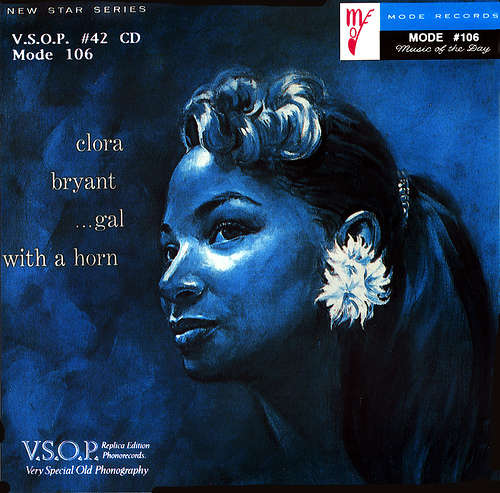
Strangely, in Dahl's interesting profile of Clora Bryant, one of the few sources of information on the singer/trumpeter currently available, no mention is made of Gal with a Horn (VSOP Records, 1995), a 1957 LP that Bryant cut for Mode Records and that constitutes the only entry in her CD discography to date. With a beautiful cover featuring a portrait of Bryant in black and blue, the album is a little too short at only eight tracks, "calculated to present Clora with tunes and setting that approximate her club performance," according to the original liner notes by Joe Quinn. Bryant sings and plays trumpet accompanied by Roger Fleming (piano), Ben Tucker (bass), and Bruz Freeman (drums), this quarter occasionally augmented by Walter Benton (tenor sax) and Normie Faye (trumpet). The program alternates between fast and slow numbers, all of them standards, showcasing the full range of Bryant's singing and playing and leaving ample room for solos.

The album kicks off with a swinging treatment of "Gypsy in My Soul" that allows her to play around with the melody for two full vocal choruses before closing her performance with an inventive, Gillespie-influenced solo. Her trumpet shines on a very relaxed reading of "Makin' Whoopee" graced by a very elegant piano solo by Fleming. This is followed by a lovely rendition of "Man with a Horn"("a natural for any trumpet playing entertainer," says Quinn) that Bryant makes entirely her own both vocally and instrumentally in one of the moodiest performances on the album. "Sweet Georgia Brown" is taken at a bouncy medium tempo that allows time for Bryant's trumpet plus a solo apiece from Benton and Fleming. The most unusual track on the LP is the Latin-flavored arrangement of Vincent Youmans's "Tea for Two" complete with a cha-cha-cha beat; it works because Bryant and everyone else involved are having a good time with it. Two tunes by Richard Rodgers and Lorenz Hart follow: Bryant reimagines the melody of "This Can't Be Love" ably aided by a lengthy piano solo by Fleming and then slows down the tempo for a wistful reading of "Little Girl Blue" that underscores the melancholy of the lyric and is embellished by a very soulful trumpet solo. Bryant again carries the weight of the group on the evergreen "S'posin'," which closes an excellent album that deserves to be better known from a very talented performer who deserves to be more than just a footnote in the history of jazz.

Clora Bryant and her trumpet

Wednesday, May 22, 2013

Vintage Records Review Desk 2: Bing Crosby, Tony Bennett & Count Basie, Rosemary Clooney & Duke Ellington, Paul Gonsalves & Ray Nance

In this new installment of the Vintage Record Review Desk, I discuss some CDs that I have either recently purchased or rediscovered on my shelf. They include Bing Crosby's latest collection of cuts from the Kraft Music Hall, the late-fifties sessions featuring Tony Bennett and Count Basie, the 1956 album that pairs up Rosemary Clooney and Duke Ellington, and a 1970 gathering of Paul Gonsalves and Ray Nance. I also make a special mention of a forthcoming biography of Rosemary Clooney that will be on the market later this summer.

I have already written a fairly extensive review of Bing Crosby in the Hall (Sepia, 2013) on the Amazon.com website, which you may access here, so I will not add a great deal to what I already stated there. This is a fantastic collection of thirty rare performances taken from Bing Crosby's ten-year run as host of the extremely popular Kraft Music Hall radio show. On that show, Bing offered a concoction of music and comic banter full of ad-libbing that was then revolutionary and that turned him into one of the most popular radio personalities of the 1930s and '40s. For different reasons, Crosby never made commercial recordings of some of the songs that he sang on the show, and that is one of the reasons why this compilation is so interesting: we get to hear Bing doing wonderful renditions of classics such as Hoagy Carmichael's "I Get Along Without You Very Well," Johnny Mercer's "I Thought About You," and Cole Porter's "You'd Be So Nice to Come Home to," among many others. John Scott Trotter provides his usually attractive arrangements ably played by a studio orchestra, and Bing is at the peak of his game, in fine vocal form, and as relaxed as he always was when he sang over the airwaves. Sepia Records have done an outstanding job remastering these tracks from old acetates once stored in Trotter's basement and transferred to tape sometime in the 1960s, and so the sound quality is really satisfying bearing in mind the age of the recordings. This release has been prepared with the help of the International Club Crosby, and the very informative liner notes, which include a brief discussion of each track, were written by Malcolm Macfarlane, the editor of the ICC's Bing magazine. This is certainly a must for Crosby fans, and I do hope that Sepia see it fit to turn this release into a full-blown series, since there is enough interesting material in the vaults to do so.

Like Crosby on the Kraft Music Hall show, Tony Bennett was also at the peak of his youthful vocal powers on two sessions that he cut in 1958 and 1959 for Roulette and Columbia with the Count Basie orchestra. At the time, both Bennett and Basie were appearing at Philadelphia's Latin Casino but were under contract to different record companies, so it was decided that they would cut two separate studio albums, one for each label. Both sessions have been reissued on Together at Last, A Perfect Combination (Jasmine, 2008), which features every side known to exist. Though he was never a band singer, Bennett has always had a wonderful sense of swing, and he sounds very much at ease backed by one of the most swinging bands of all time, which at that point included jazz greats such as Thad Jones and Joe Newman (trumpet), Al Grey and Benny Powell (trombone), Freddie Green (guitar), and Sonny Payne (drums), among others. The arrangements are perfect for Bennett's voice, never obtrusive on ballads and full of rhythmic inventiveness on rhythm numbers, and the material chosen is mostly a fine selection of standards from the pens of Vincent Youmans, the Gershwins, Cole Porter, Harry Warren & Al Dubin, Howard Dietz & Arthur Schwartz, Johnny Mercer et al. George Hulme's liner notes, as it is often the case with Jasmine's releases, are a little too brief, but at least they do contain a discography of the sessions. Jasmine has had the good sense to dispense with the fake applause and audience reaction that were overdubbed onto the original LP release, making this the definitive edition of these very enjoyable sessions.

In 1956, about two years before the Bennett-Basie summit, the studios of Columbia Records witnessed yet another magnificent collaboration, that of Rosemary Clooney and the Duke Ellington orchestra. Though this association, which produced the excellent album Blue Rose (Columbia-Legacy, 1999), might have seemed rather unlikely at first sight, the results certainly proved otherwise, as Clooney proved to be not only a fine pop singer, but also a jazz vocalist of the first order. This is also evident in the recordings she made with Benny Goodman and with Harry James, and particularly, in her outstanding series of songbook albums cut in the 1970s and '80s in a small-group jazz setting, but to my ears, her LP with Ellington represents her best work as a jazz singer. As always, Duke and Billy Strayhorn provide perfect musical settings for Clooney's voice: the arrangements are imaginative and often intricate without ever getting in the way of her lightly swinging, highly attractive voice. Rosie tackles Ellington classics such as "Sophisticated Lady," "I Let a Song Go out of My Heart," "It Don't Mean a Thing (If It Ain't Got That Swing)," "Mood Indigo," and "I Got It Bad (and That Ain't Good)" with ease, and all tracks are embellished by first-rate solos from Ellington's sidemen, including names such as Ray Nance and Clark Terry (trumpet), Johnny Hodges, Russell Procope, Harry Carney, and Paul Gonsalves (saxophone), and others. The indispensable Columbia-Legacy reissue includes an interesting essay by Will Friedwald, as well as two bonus tracks from the sessions ("If You Were in My Place" and "Just A-Sittin' and A-Rockin'") that were not included in the original album. By the way, a new biography of Rosemary Clooney, entitled Late Life Jazz: The Life and Career of Rosemary Clooney (Oxford UP), is scheduled for publication later this summer. It is co-authored by Ken Crossland and Malcolm Macfarlane (the latter wrote the liner notes of the Bing Crosby release reviewed above), and we look forward to reading it as soon as it is available.

And finally, a CD that I recently purchased as a gift for my in-laws, Scott and Susan Spinka, of Pittsboro, NC. Two of the musicians that were a part of the Ellington band during the Blue Rose sessions, Paul Gonsalves and Ray Nance, came together in August and September of 1970 in New York for the two sessions that make up the album Just A-Sittin' and A-Rockin' (Black Lion, 1990). On the first of those sessions, they are joined by Raymond Fol (piano), Al Hall (bass), and Oliver Jackson (drums) and go through a very appealing selection of tunes, mostly by the Duke and Billy Strayhorn. Nance alternates between trumpet and violin and even offers a sample of his tuneful, gravelly singing on the title track of the album and on the light-hearted "I'm in the Market for You." Gonsalves plays some very lyrical, breathy tenor saxophone definitely influenced by another of the Duke's great reedmen, Ben Webster. For the second session, the group is augmented by Norris Turney (alto saxophone and flute), and the great Hank Jones replaces Fol on the piano stool. That second meeting spawned "B.P. Blues," a lovely Ellington-penned blues tune that kicks off the album, but for the most part, the numbers chosen, such as "Don't Blame Me" and a very beautiful reading of Matt Dennis's "Angel Eyes," are standards not written by Ellington or Strayhorn. The CD reissue, which reprints the original liner notes by producer Alan Bates, is rounded up by two selections ("I Cover the Waterfront" and "Stompy Jones") not included in the original LP. Although this marvelous session is currently out of print on CD, it is certainly well worth picking up a second-hand copy—that is, if one can still be found at a reasonable price!

Tuesday, January 29, 2013

Interview with Philip Furia, Author of The Poets of Tin Pan Alley - Part 3 of 3

George and Ira Gershwin
The interview with Philip Furia, author of The Poets of Tin Pan Alley, among several other books on songwriters and songs from the Great American Songbook, comes to a close with this third and final part. On this occasion, Mr. Furia discusses the lyrics of Ira Gershwin, speculates as to why not many songs from the Golden Age of American songwriting are overtly political, and talks about the often difficult relationship between songwriters and Hollywood, as well as telling us a little about his many other projects. I would like to thank Mr. Furia for his dedication to researching the work of the great composers and lyricists, and also for the time and effort that he has put into this interview. I hope the readers enjoy this final part of our conversation, which was most interesting for me.

The Vintage Bandstand: In your very insightful chapter on Ira Gershwin, you observe that “what really interested him was less the romantic message than the medium of language itself—the vocabulary, idioms, and phrasing of American speech.” While I completely agree with that statement, it makes me wonder—isn’t that the case with every lyricist whose work you examine in your study? Or do you think that this concern with language is more obviously acute in the lyrics of Ira Gershwin?

Mr. Furia: Hmmm. This one made me really think. Let’s go back to an earlier question about the difference between poetry and lyrics. When we read a lyrical poem, such as Yeats’ “Easter 1916,” we assume that Yeats is writing about what he deeply feels about something that has happened to him. When Ira Gershwin writes “Someone to Watch Over Me” (1926), we don’t feel he is writing about his personal feelings or experience, however much he may share the lyric’s longing to be loved and protected. Songwriters of this era, like the troubadours of Provence, were ringing changes on a handful of romantic themes—falling in love at first sight, cataloging the beauties of their beloved, suffering the anguish of romantic rejection. Occasionally, a song such as the current hit, “Someone Like You,” may register the songwriter’s own personal romantic agony, but for the most part, particularly in the Golden Age, songwriters were understood to be crafting variations of a few romantic themes that had only remote resonance with their personal lives.

Yet in crafting those variations, some lyricists emphasized romantic passion, heartache, and euphoria in a wider variation more than did others. Hart, Berlin, Mercer, and Porter seem to me the lyricists with the greatest emotional “range,” from the ecstasy of “Wait Till You See Her” to “Nobody’s Heart”—to take two examples from some of Hart’s final songs in 1942, a year before his death. Other lyricists seem to treat romance playfully—but no less brilliantly. Here I’d place Ira Gershwin and Yip Harburg, who met in high school and remained lifelong friends. Ira wrote almost no lyrics of burning passion or wrenching romantic heartache until, late in his career, he wrote “The Man That Got Away” (1954) with Harold Arlen. Same with Yip Harburg, whose “Last Night When We Were Young” (1936, also with Arlen) was a rare but moving plunge into the depths. Both “Yip” and “Gersh,” as they nicknamed themselves in high school light verse, reveled in linguistic playfulness: Ira rhyming “You say ‘either,’ and I say ‘eye-ther'"; Yip twisting words in “I simply relish this swellish condish.” In such lyrics, it seems to me the linguistic play upstages the romantic passion.

TVB: The foremost lyricists of the golden age became masters at “saying ‘I love you’ in thirty-two bars,” to use your quotation from the biopic of Gus Kahn. However, as you point out in your book, many of them often depicted love in their songs from a markedly anti-romantic perspective. How do you explain this lyrical phenomenon?

Mr. Furia: Playing off my answer to the previous question, “saying ‘I love you’ in thirty-bars” meant finding new twists to the standard romantic themes of longing for love, falling in love, and losing love. A good lyricist always handled these standard situations with a clever twist, frequently a seemingly anti-romantic twist. Ira Gershwin describes a man’s reaction o his first passionate kiss with something we say when find our lover in bed with someone else: “How Long Has This Been Going On? (1928)” He and Yip Harburg wrote a song in 1934 called “What Can You Say in a Love Song (That Hasn’t Been Said Before)?” And what lyricists came up with was often unromantic, such as Larry Hart’s saying in “My Funny Valentine” (1937), “Your looks are laughable, unphotographable . . . “ or Cole Porter saying, “It’s the wrong time, it’s the wrong place, though your face is charming it’s the wrong face . . . but it’s all right with me” (1953). The best twist a lyricist could give to saying “I love you” was to say it unromantically

TVB: In your chapter on Howard Dietz and Yip Harburg, you note that Harburg was “deeply political.” We can clearly see that in his excellent lyric to “Brother, Can You Spare a Dime?” However, not too many lyrics from the golden age are overtly political. Why do you think that is the case, especially at a time when the United States were going through a harsh economic depression?

Mr. Furia: Another good question that I’ve thought about for years. You had political songs in the nineteenth century and certainly since the rise of rock and folk music in the 1950s and ‘60s, but very few in the Golden Age (Harburg’s “Brother, Can You Spare a Dime?” from 1932, always the exception that proves the rule). I think it goes back to the fact that most popular songs in this era came from Broadway and Hollywood musicals. With a few exceptions, such as “Ol’ Man River” from Show Boat (1927), these musicals were not overt political vehicles, and they called for frothy songs about love that suited their boy-meets-girl stories. I’m not a cultural historian, but my guess is that their apolitical nature also suited what radio stations wanted to play. The few musical films and shows that offered more political fare, such as Hallelujah! I’m a Bum (1933) and The Cradle Will Rock (1937), produced virtually no hit songs. While some songwriters, such as Woody Guthrie, were writing political protest songs, what most people listened to were the songs of Cole Porter and Irving Berlin, who even took heat in 1938 when he updated an old World War I song, “God Bless America,” for presuming, as a Jewish immigrant, to speak for America on the brink of World War II. Lyricists did much to look at depression tangentially in romantic lyrics such as Ira Gershwin’s “Things Are Looking Up” and “Nice Work If You Can Get It” (1937).


TVB: Though Irving Berlin, Cole Porter, the Gershwins, Rodgers & Hart, and Harry Warren, Al Dubin, and Mack Gordon graced movie musicals with some memorable songs, many composers and lyricists felt deeply constrained and unhappy in Hollywood. Why was the movie industry so reluctant to transpose Broadway musicals onto the screen? In retrospect, it seems that a good opportunity for the creation of great songs was wasted in most movie musicals whose plot revolved around the production of a musical. Don’t you think that the inherent metafictional nature of such films could have spawned some interesting songs on the subject of songwriting itself?
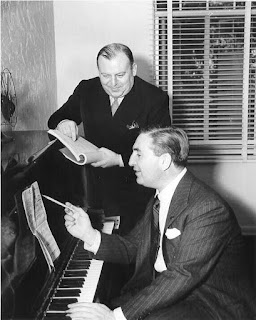
Al Dubin and Harry Warren
Mr. Furia: Songwriters who worked on Broadway musicals were at the center of the production from the outset and continued working with playwrights, directors, choreographers, and others through rehearsals and out-of-town tryouts, adding songs, altering songs, and doing everything they could to pull the show together. On opening night, their names were in lights on the theater marquee as “Rodgers & Hart’s Babes in Arms.”

When they went out to Hollywood after sound came to the movies, a very different system was in operation—one that pushed songwriters to the sidelines. They had little say in how their songs were used and sometimes only given the outline of a screenplay to work with. They were simply expected to “write hits” that would earn additional money for a film. “Out here,” composer Harry Warren observed of Tinseltown, “songwriters were the lowest form of animal life.”

As I said earlier, Hollywood at first worried that audiences would find it ludicrous if characters suddenly burst into expressive song then went back to dialogue. Therefore early movie musicals were “back-stagers” in which characters portrayed singers and dancers putting on a stage musical. When they sang, it was because they were rehearsing or performing a song before an on-screen audience. The songs they usually sang were the pop hits of the day. For example, when Jolson sang Irving Berlin’s “Blue Skies” in The Jazz Singer in 1927, the song had already been a big hit from the previous year.

Realizing that they would need lots of songs for such back-stagers, Hollywood studios bought out the catalogs of the old Tin Pan Alley sheet-music publishing firms and moved their composers, lyricists, and arrangers to the West Coast. Old songs could be recycled into new films and become money-making hits (which is what “As Time Goes By,” a song by Herman Hupfeld from 1931, did when it was inserted into Casablanca in 1942). When a studio did a film version of a Broadway musical, they frequently gutted all or most of its songs and had their in-house songwriters write new songs which the studio owned and could make money on. Occasionally, a song from a Broadway show was so well-known that the movie had to keep it (and pay for it). Cole Porter’s “Night and Day” was so famous that the musical it came from, The Gay Divorce (1932), was referred to as “The ‘Night and Day’ show.” When RKO did a film version of the show, they had to keep “Night and Day,” but they threw out all of Porter’s other songs and added new ones to the score. They also had to change the title of the show to The Gay Divorcée. It was 1934, the year the censorship “Code” came into force, and, while divorce could never be gay, a divorcée could since musicals had long before proved that even a widow could be merry.


To answer the last part of this question, a few of the early back-stager musicals did portray the creation of songs for a show, such as Lord Byron of Broadway (1930), but the films were generally so unimaginative that these opportunities were squandered. Even when Hollywood started making “biopics” about songwriters, such as Rhapsody in Blue (1945) and Night and Day (1946), the “inspiration” scenes for songs are frequently ludicrous. An exception is the scene where James Cagney, portraying George M. Cohan in Yankee Doodle Dandy (1942), writes “Mary’s a Grand Old Name.” Such songs still fall within the “performance” convention of presenting song in film. That convention, however, robs song of its expressive power. As I said earlier, when characters sing in opera, operetta, and stage musicals, they are not “performing” a song but, in the context of character and story, expressing what they feel at a heightened dramatic moment. That kind of expressive song only entered film in the early 1930s and largely disappeared by the 1960s. The few movies that tried to present songs expressively, such as At Long Last Love (1975), bombed with audiences, who had come to view characters in movies breaking into song as ludicrous. The only exceptions to that lost convention were cartoon musicals, musicals aimed at children, such as Mary Poppins (1964), and movies that were film adaptations of Broadway musicals. Only in these cases do contemporary movie audiences allow characters to sing expressively. In all other movies, a song must be presented as a performance—just as in the earliest days of film musicals.

Hoagy Carmichael at the piano
TVB: In your book, you observe that songs that originated as jazz instrumentals seldom received lyrics worthy of note, Hoagy Carmichael’s “Star Dust” and Duke Ellington’s “Satin Doll” being among the notable exceptions. What is it, then, that makes jazz instrumentals particularly difficult to tackle for lyricists?

Mr. Furia: Since I’m not a lyricist, this is only speculation, but I imagine that there is virtually no collaboration between composer and lyricist when words are set to a jazz instrumental. Even though the music came first in other collaborations, composer and lyricist were usually in the same room together sweating out the lyric. The toughest thing for a lyricist, I imagine, is trying to hear what the music is “saying”—what latent emotional meaning lies in those abstract musical notes and phrases, rhythms and harmonies, that must be made articulate in words. There are several stories about the Gershwins, Dietz and Schwartz, and other collaborators in which the lyricist has asked the composer to slow a sprightly melody down to a languid ballad to suit the emotional contour of a lyrical idea. That kind of interplay usually didn’t happen when a lyricist added words to an existing jazz instrumental. With the great lyricists, of course, there sometimes didn’t need to be. In 1954, when Johnny Mercer heard Lionel Hampton and Sonny Burke’s “Midnight Sun” on his car radio as he drove along a California freeway, he was so taken with the instrumental that he pulled into a gas station, called the radio station on a pay phone (these were the days before cell phones), and asked them to play the song again. On just this second hearing, Mercer came up with a seamless, sensuous lyric, and he claimed the first thing that came to him were those opening feminine rhymes—“palace,” “chalice,” “aurora borealis.”

I suspect another problem is the lack of what Ira Gershwin called “particularity.” Jazz instrumentals were not written for a Broadway or Hollywood musical so there is no character or dramatic situation to help a lyricist come up with a new way to say “I love you.”

TVB: Besides The Poets of Tin Pan Alley, you have written whole books about Johnny Mercer, Irving Berlin, and Ira Gershwin. What was it about those lyricists that drew you to study their lives and careers more in depth? Are you currently planning or working on any further similar studies?

Mr. Furia: I wrote the book about Ira Gershwin right after The Poets of Tin Pan Alley. I wanted to look at one of those lyricists in depth, and Ira seemed a good choice. He’d had a fairly long collaboration with his brother but then wrote with a variety of other composers—Kern, Arlen, Weill—each with a very different musical style. He’d also worked with equal success on Broadway and in Hollywood. And he’d also written a lot about the art of lyric writing, especially in his wonderful anecdotes about his own songs, Lyrics on Several Occasions (1959). By sheer luck, the Gershwin family had just created an archive of the papers of the Gershwin brothers in Beverly Hills, so I got to be one of the first to work on that huge collection of manuscripts and other materials. Sheldon Meyer, my editor at Oxford, was enthusiastic when I proposed the idea for the book, so I could easily “get started.”

I had started working on another book for Oxford, about Hollywood lyricists, when another editor, from Simon & Schuster/Schirmer, approached me about doing a book for a series they were starting about popular song composers. I said I’d be interested but that it would have to be a composer who was also a lyricist. That pretty much meant Berlin or Porter, and I thought I’d be better able to follow Berlin’s music than Porter’s (though I still had to bring in a former music graduate student I’d taught at Minnesota, Graham Wood, to help me with the musical analyses). Berlin was also a good choice because his extensive manuscripts, scrapbooks of newspaper articles and interviews, and correspondence was just then being catalogued at the Library of Congress, so I was, again, one of the first to work on that collection. When I was writing The Poets of Tin Pan Alley, I was fortunate to be one of the few writers to receive permission to quote from Berlin’s song lyrics. Berlin was his own music publisher, so he owned the copyrights to his songs (unlike most other songwriters). He and his assistants were notorious for refusing—sometimes angrily so—to allow anyone to quote from his works. But his attorney read my chapter on his songs in The Poets of Tin Pan Alley and went to bat for me, so I was pretty sure I could get permission to quote from his songs. Finally, a colleague here at the University of North Carolina Wilmington turned out to be a friend of Mary Ellin Barrett, Berlin’s oldest daughter, and put me in touch with her. She is a writer herself and was enormously helpful.

The only downside to the Berlin book was that Sheldon Meyer, my editor at Oxford, felt betrayed that I had gone with another publisher and halted work on the book on Hollywood lyricists. We mended fence after the Ira Gershwin book did well, and the Gershwin family invited me and my wife to the big centenary celebration for Ira at Carnegie Hall, which Sheldon and his wife also attended.

Songwriter and singer Johnny Mercer
By this time I had already left Minnesota for North Carolina, and a natural subject for a book was Johnny Mercer, the only major lyricist of that era from the South. Savannah, his hometown, to which he returned frequently throughout his life, is only a few hours’ drive from Wilmington, so I could go there to interview friends and family members. I also interviewed people in California, New York, and other places, making this a true biography of Mercer rather than just a study of his songs (as my books on Ira Gershwin and Irving Berlin had been). Once again I had the good fortune to have access to Mercer’s papers, including a manuscript of an autobiography. His widow Ginger bequeathed all of this to Georgia State University in Atlanta, which set up a superb Mercer Archive.

Two years ago, after more than fifteen years of research, I completed the book on Hollywood lyricists, though by then it had expanded to include how songs were presented in all movies—not just musicals but dramatic films as well. My wife, Laurie Patterson, and I watched more than a thousand movies, many in film archives at UCLA, the Library of Congress, and the Wisconsin Film Archive. Our co-authored book, The Songs of Hollywood, came out in 2010 from Oxford University Press. Although Sheldon Meyer, by then retired, died before its publication, he knew it was finally coming out.

Right now I don’t have another book in progress but for the last couple of years I’ve been doing a series of short programs for our local public radio station. It’s called The Great American Song Book and each day I take one of the classic standards, talk about how it was written, why it’s so good, and tell an amusing or poignant story associated with the song. Then we play two versions of the song—a classic rendition by Sinatra, Ella, or another period singer, then a contemporary version by Rod Stewart, Willie Nelson, or the Supremes. I’ve been thinking about ways of turning these programs—now more than two hundred of them—into a book. If I do, I’m going to dedicate it to the memory of Sheldon Meyer.

Philip and his wife, Laurie (Photo: Jamie Moncrief)

Tuesday, January 22, 2013

Interview with Philip Furia, Author of The Poets of Tin Pan Alley - Part 2 of 3

Philip Furia, author of The Poets of Tin Pan Alley
In the second part of this long, detailed interview, Philip Furia, author of the excellent book The Poets of Tin Pan Alley (Oxford University Press), discusses the success of integrated musicals in the 1940s, comments on the influence of ragtime on the lyricists of the Golden Age of songwriting, elaborates on the so-called "list songs," and attempts to explain the possible reasons why Cole Porter's work embraces both witty and overtly sentimental lyrics. I hope you enjoy this second installment of my conversation with Mr. Furia, and if you are interested, the first part can be found here.

The Vintage Bandstand: And, while we are on the subject of witty, urbane lyrics, what changed during and after World War II that put an end to this heyday of urbane lyrics and ushered in the era of integrated musicals such as Oklahoma!?

Mr. Furia: I’m not a cultural historian, so let me quote Irving Berlin in the 1940s, saying “Nothing is so old as yesterday’s sophistication.” I think he meant that during the depression Americans loved to fantasize about sophisticated couples in evening clothes, drinking champagne, engaging in witty banter, and dancing on ocean liners. With the onset of World War II, Americans rallied to more homespun themes. When Richard Rodgers proposed to his longtime collaborator Lorenz Hart, that they do a musical based on a play about cowboys and ranchers in the Oklahoma Territory, Hart refused saying Broadway audiences would never be interested in such a corny subject. When Rodgers learned that Oscar Hammerstein was interested in turning the same play, Green Grow the Lilacs, into a musical, the collaboration of Rodgers & Hammerstein was born.

Richard Rodgers & Oscar Hammerstein II
Hammerstein was one of the few lyricists of his generation to write the book for his musicals as well as the lyrics. Ira Gershwin, Lorenz Hart, Cole Porter, and others were content to work with a playwright and tailor their lyrics to his or her script. But Hammerstein was so committed to the “integration” of story, lyrics, and music that Rodgers altered his usual working habits and let Hammerstein write lyrics first, which he then set to music—much like the collaborative practice of Gilbert & Sullivan. Yet Hammerstein had long worked in the “music-first” fashion with Jerome Kern and other composers that he would write lyrics to melodies he made up himself before he gave them to Rodgers. Hammerstein’s wife said her husband’ melodies were terrible, and Rodgers always insisted that Hammerstein just give him the lyrics and not sing them to his own melodies.

The phenomenal success of Oklahoma! on Broadway—a musical that opened not with a bevy of chorus girls but an old woman churning butter—spawned other “Americana” works—Bloomer Girl (1944) and Annie Get Your Gun (1946). While songs from these productions were tied to character and dramatic situation, the creation of “Original Cast Recordings” in boxed sets of 78rpm records made even such “integral” songs as “I Cain’t Say No” popular. In the 1950s, with the invention of LP (Long-Playing) records, such cast recordings could make a hit of so unlikely integral songs as “The Rain in Spain” from My Fair Lady (1956) or “Ya Got Trouble” from The Music Man (1957).

Another force that fostered the integrated musical was Hollywood. By the late 1940s, television had invaded the American home, and movies found it hard to lure audiences out of their living rooms. Film production was scaled back, especially in movie musicals, which were the most expensive kinds of films to mount. The few movie musicals that were made increasingly became film adaptations of Broadway musicals. Why risk an original film musical with new and untried songs when you could make a film version of a successful Broadway show with already-established hit songs. Most of these film adaptations, such as South Pacific and West Side Story, were cinematically dreadful—stiff, stagey, and frequently with dubbed singers. But the fact that audiences could see a film version of a Broadway show most could not afford to see on the stage made such movies successful. That audiences loved them attests to the power of the original stage musical that somehow survived the transfer to the screen.

TVB: I find your observation about the way that lyricists like Irving Berlin “ragged” the lyrics of some of his songs very interesting. You compare some lyrics by Berlin and Hart, for example, with the works of 1920s poets like Marianne Moore and William Carlos Williams, which show similar word-ragging techniques. In your opinion, is it possible that these poets were, in turn, influenced by the works of the popular songwriters of the day?

Dorothy Parker
Mr. Furia: It’s tempting for me to speculate that poets were influenced by song lyrics—or even vice versa—but I think each group moved in its own world. While poets such as Williams and cummings certainly heard popular songs (and sometimes alluded to them), they were experimenting with the poetic line in free verse. Pound even wrote a poem to Whitman that credited him—“You broke the new wood” of free verse--but criticized him for a lack of structure in his poetic line: “Now is a time for carving.”

The lyricists, in turn, were much more interested in rhymed, metrical verse of poets like Ogden Nash and Dorothy Parker. Remember, that while we now think of Stevens and Williams as among the great poets of the early twentieth century, at the time they were unknown except to a small circle of readers.

TVB: And, speaking of rag, how important was the arrival of ragtime, with its rhythmic syncopation, for American mainstream music at large? I find that African American music played an important role in the development of early commercial country music, but to what extent was the work of white songwriters such as the Gershwins, Irving Berlin, Johnny Mercer, Harold Arlen, and Rodgers & Hart, to name but a few examples, influenced by black musical forms?

Mr. Furia: This is more of a musical than a lyrical question, since ragtime, blues, and other African-American musical forms had a deeper influence on music than on lyrics until the advent of rock ‘n’ roll in the 1950s. I’m not musically hip enough to describe that influence, but musical friends tell me that composers such as Gershwin and Arlen, as well as Porter and Rodgers, blended African-American musical styles with those of European classical music. Even Irving Berlin, hardly a classically trained musician, was familiar with opera and symphony. His early work abounds in ragtime songs, including his first big hit, “Alexander’s Ragtime Band” (1911), but he also wrote syncopated ragtime songs in classical counterpoint, such as “Play a Simple Melody” (1914), in which two different melodies and two different lyrics are sung simultaneously.

Stephen Foster
American popular song, since Stephen Foster’s day, has been an amalgam of European and African-American musical styles. While Foster kept these styles separate, writing such elegant ballads as “Beautiful Dreamer” (1864), as well as such rhythmic numbers as “Camptown Races” (1850), by the end of the nineteenth century songwriters were fusing the two styles. Commercial ragtime songs, unfortunately dubbed “coon songs,” were enormously popular in the early twentieth century, their sprightly syncopation challenging the solemn rhythms of waltzes and ballads. Lyrically, the most important influence of these ragtime songs was to make vernacular and slang the idiom of popular song. Songs such as “Hello! Ma Baby” (1899) and “Bill Bailey, Won’t You Please Come Home?” (1902) were a breath of fresh air from such solemn lyrics as “After the Ball” (1892). By 1910, such colloquial lyrics as “Some of These Days (You’re Gonna Miss Me, Honey”) were jostling against such pious sentiments as “Ah! Sweet Mystery of Life (At Last I’ve Found Thee).”

TVB: It is noticeable that many Tin Pan Alley songwriters were adept at writing “list songs.” Why do you think that type of song was so prominent during the golden age? What is it about a list song that appeals so much to a lyricist?

Mr. Furia: The “list” or “catalog” style goes back well beyond the Golden Age of American popular song. We find it in Shakespeare’s sonnets, Mozart’s operas, and such Gilbert & Sullivan numbers as “I Am the Very Model of a Modern Major-General.” It also is used by Edmund Rostand, when Cyrano “lists” all the ways his dueling adversary could have insulted his big nose. Whitman uses the catalog structure throughout his poetry. I think the appeal of the list structure to writers is the challenge to come up with item after item, each funnier than the previous one. There’s something infectious about the catalog that keeps listeners asking for more and writers wanting to “top” themselves.

Ira Gershwin and Vernon Duke at work

Catalog songs had their heyday in the 1930s with such numbers as Ira Gershwin and Vernon Duke’s “I Can’t Get Started” (1936) and Rodgers & Hart’s “The Lady Is a Tramp” (1937). The master of catalog songs, of course, was Cole Porter, and his best was “You’re the Top” (1934), which drew so many calls for encores on the opening night of Anything Goes that Ethel Merman had to tell the audience, “There are no more lyrics.” Porter continued to add to the song, and secretly his good friend Irving Berlin even added a risqué refrain:

You’re the primal heat of a bridal suite in use;
You’re the breasts of Venus,
You’re King Kong’s penis,
You’re self-abuse.

Such songs were perfect for the sophisticated 1930s, for they blended literate allusions—“You’re Botticelli . . . You’re Keats, you’re Shelley . . .”—with contemporary ones—“You’re cellophane . . .you’re Pepsodent.”

One problem with such list songs is that over time, many of these contemporary allusions lose their currency, such as “You’re Garbo’s salary.” A bigger problem is that the list is merely that—a list—and the song has no narrative or dramatic development. That’s why I admire a list song such as Leo Robin & Ralph Rainger’s “Thanks for the Memory” from the film The Big Broadcast of 1938, in which a divorced couple played by Shirley Ross and Bob Hope sit at an ocean liner bar, down martinis, and recall images from their marriage—“Castles on the Rhine . . . nights in Singapore . . . swingy Harlem tunes . . burning toast and prunes.” As the song builds, however, they realize that they are still in love but too “sophisticated” to let their emotions show.

Cole Porter
TVB: Cole Porter has always fascinated me because of the witty spontaneity of his lyrics and the sheer exuberance of his list songs. Yet, as you point out in your book, there is a sort of schizophrenic quality to his output as a whole, in that the pure urbane wit of his most enduring work contrasts starkly with the excessive sentimentality and melodrama of some of the songs he wrote. How, if at all possible, can these two opposed sides of Porter’s oeuvre be reconciled?

Mr. Furia: Boy, that one has stumped me for years. It would be easier to explain if other lyricists had done the same thing, but the only major one who did was Howard Dietz, who could write the elegantly urbane “I Guess I’ll Have to Change My Plan” (1929), then turn around and write such histrionic stuff as “Alone Together” (1932) and “You and the Night and the Music (Fill Me with Flaming Desire)” (1934). Larry Hart only rarely dropped his wryly mordant style in such lyrics as “With a Song in My Heart” (1929), and Ira Gershwin did so only when he was stumped by a Jerome Kern melody and finally, in desperation, came up with the overblown “Long Ago and Far Away” (1944), which embarrassed him so much he “phoned it in” to the studio.

But Porter shifted from extremes of debonair wit—“I Get a Kick Out of You” (1934)—to lugubrious melancholy—“Begin the Beguine” (1935)—throughout his career. Toward the end of his working life, he could write such a sophisticated, casual come-on as “It’s All Right with Me” (1953) alongside the cloyingly sentimental “True Love” (1956).

Go figure. My best guess is that, like Irving Berlin (who could also do the same but within a narrower spectrum between smart and sappy), Porter was of an older generation. Born in 1891, he was a step older than Hart, Ira Gershwin, and others born about five years later, and well older than Dorothy Fields and Johnny Mercer. At that age, he would have grown up with the sentimental ballads of the 1890s, and the first song of his that had any measure of success was the very Victorian “An Old-Fashioned Garden” (1919). He went without any other success for years, while Hart, Gershwin and other lyricists ushered in a new age of literate sophistication in the mid-1920s. Porter embraced that style and in 1928 had renewed success with such witty and suggestive hits as “Let’s Misbehave” and “Let’s Do It,” but I think he still had one foot back in that late Victorian era.