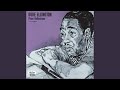
In addition to Nat King Cole's excellent After Midnight
, one of my favorites among his always remarkable Capitol albums, this new post in the Vintage Records Review Desk series features four male vocalists that are now forgotten or that, in my opinion at least, do not currently enjoy the recognition that they deserve. In fact, in the case of three of them (Dick Todd, Ronnie Deauville, and Herb Jeffries) compact-disc releases are actually rather scarce, yet all the choices presented here are highly recommendable. Incidentally, the singers that are spotlighted today have taken many a tip from Cole, from Bing Crosby, or from both of them.
In my recent article about Jean Sablon, I mentioned the name of
Dick Todd, one of the many singers of the 1930s and 1940s who were influenced by the sound of Bing Crosby, so I thought it would be a good idea to begin this new installment of the Vintage Records Review Desk by spotlighting one of the precious few CDs currently available by this crooner once hailed as the "Canadian Crosby." The moniker was not without justification, since Todd often reminds us of Bing's husky voice from the 1930s, but it certainly has had a damaging effect on his legacy, as Todd has gone down in the history of pop music—when his name is brought up at all, that is—merely as one of several Crosby imitators. In his early years as a solo act, Frank Sinatra recorded
a parody of "Sunday, Monday, or Always" for a V-Disc which went, "I'll soon become a wreck / They're breathing down my neck / Dick Haymes, Dick Todd, and Como." If anything, this is ample proof of Todd's popularity at the time (he had actually begun his recording career slightly earlier than Young Blue Eyes) yet unfortunately, his popularity began to dwindle in the late 1940s, and by the 1950s, he was a relic of the past, forgotten and unable to make any sort of comeback. However, even a superficial listen to the two-CD set
Orchids for Remembrance (Jasmine, 2003), containing 52 sides cut for Bluebird during Todd's heyday, between 1938 and 1942, reveals how unfair his fate was.
For starters, even though his phrasing and intonation were shaped by Crosby, it is very clear that he was not just a Bing soundalike; rather, he did have a style of his own and possessed a rich voice that, like Crosby's, went over well on radio. Moreover, his confidence in his abilities as a singer seems to increase with the passing of time, aided by the polished playing of the studio orchestra under the direction of Leonard Joy. One of the main differences with Crosby is that Todd was no jazz singer; he was at his best as a balladeer, and on this Jasmine compilation there are plenty of examples of his mastery of slow numbers, including a beautiful version of "Moonlight Serenade," one of the highlights of a set that also features Todd's takes on some oft-recorded tunes, such as
"I'll Be Seeing You," "Polka Dots and Moonbeams," "How About You?" and
"Say It Isn't So," to name but four. After several years of inactivity and personal problems, Todd was almost penniless when he passed away in 1973. Mr. David Lobosco remembers Todd in a rather detailed article published in his blog,
A Trip Down Memory Lane, which you can read
here.
By the mid-1950s,
Nat King Cole had gradually concentrated on singing and had become a pop star thanks to a slew of commercially and artistically successful concept albums for Capitol. Not that he had totally forgotten his past as the founder and leader of the trailblazing King Cole trio, which paved the way for so many similarly styled combos, but there was undeniably more money in pop singing, and he was gifted with a unique voice that captivated the public's imagination. And then, in 1956, Cole stepped back into jazz territory by revisiting his trio sound on an album entitled
After Midnight (Capitol, 1956 / 1999). Cut over four sessions, the LP finds Cole playing piano and singing in the company of John Collins on guitar, Charlie Harris on bass, and Lee Young (Lester Young's brother) on drums. Each session features a guest star, which is a fine idea because it adds depth to the sound of the trio-turned-quartet, particularly if we bear in mind that the guests are musicians of the caliber of trumpeter Harry "Sweets" Edison, altoist Willie Smith, violinist Stuff Smith, and valve trombonist Juan Tizol. As the title seems to imply, this is a very relaxed album, with everyone involved interacting seamlessly as Cole revisits classics such as
"Sweet Lorraine," "Just You, Just Me," "Caravan" (with the benefit of composer Tizol's trombone), and
"I Know That You Know." The ballads (
"Blame It On My Youth," "You're Looking at Me") are moody, and there are also some nice surprises in a lovely, violin-laden reading of
"When I Grow Too Old to Dream" and the lesser-known
"Don't Let It Go to Your Head." This is essential listening for any jazz aficionado, and the 1999 CD reissue adds six more tracks to the twelve on the original LP. The most interesting of these are a pensive ballad treatment of
"You Can Depend on Me," usually associated with blues shouter and big band singer Jimmy Rushing, and a swinging take on Johnny Mercer's
"Candy."
One of several vocalists who have recognized their debt to Nat King Cole is
Buddy Greco, a prolific singer and pianist whose playing is heavily influenced by Cole and whose long career yielded notable albums such as
Buddy Greco at Mister Kelly's and
Songs for Swinging Losers. Some critics have noted that Greco is best experienced in a nightclub setting because of his engaging stage persona and his penchant for improvisation. If that is true, though, the two-fer
My Buddy / On Stage! (Collectables, 1999) is not the best place to hear Greco live, since, as Will Friedwald has noted, these seem to be studio albums with added sound effects to make them appear to be live recordings. On aural evidence, it is hard to disagree with Mr. Friedwald, but it does not matter, because these are two of the best releases of Greco's career, recorded for Epic in 1959 and 1964 respectively. I have never understood the appeal of contrived live albums, particularly when the technology did exist to record actual live performances, but Tony Bennett's fine sessions with the Count Basie orchestra, made around the time that My Buddy was cut, were also issued that way. Both LPs presented here are equally interesting, though, and they are full of very inspired moments, such as, for instance, the sparse, swinging versions of
"Like Young" and
"Just in Time," the introspective treatment of Erroll Garner's
"Misty" that features a celesta, the appealing Italian tune
"(I Don't Care) Only Love Me," and the lyrically updated readings of
"The Lady Is a Tramp" and
"How About You" on
My Buddy. Cut five years later,
On Stage! seems to leave more room for Greco's piano playing ("Get Me to the Church on Time," for instance, includes a very engaging solo from him, while "It's Such a Happy Day" is an instrumental version of a rather lackluster tune written by Jackie Gleason) and also has its highlights, among them "The Best Man," "Dreamy," a magnificent extended reading of "I Can't Get Started," and the bluesy "The Best Is Yet to Come" and "Nobody Knows You When You're Down and Out." This Collectables CD reissue also includes Greco's minor hit "Mr. Lonely," and even though the sound is good, the notes by Mark Marymont, while briefly outlining Greco's career, do not offer any information about the two albums contained herein, which is strange to say the least.
Florida-born
Ronnie Deauville began his career as a big band vocalist during the twilight of the great band era, and before trying his luck on his own, he was featured with Glen Gray, Ray Anthony, and former Glenn Miller sideman Tex Beneke. However, his best effort was an album that he cut in 1956 (the same year as Cole's
After Midnight) with a quintet led by Lloyd Shaffer. Titled
Smoke Dreams, it is a collection of subdued, intimate arrangements that are perfect for Deauville's thin, though hauntingly expressive voice. The quintet provides a relaxed setting for Deauville to shine on very slow numbers such as "I Kiss Your Hand, Madame," "Love Is Here to Stay," "Say It Isn't So," "Something to Remember You By," and
"I Had the Craziest Dream." Unfortunately, Deauville was involved in a car accident, following which his life depended on an iron lung for more than a year. This, together with his problems with polio and the fact that he was wheelchair-bound from then on, was a blow from which his career, sadly, never recovered. But
Smoke Dreams remains a truly forgotten gem of 1950s classy pop singing that it is high time to rediscover. Fortunately, this is now possible thanks to
The Vocal Touch of Ronnie Deauville (Sounds of Yesteryear, 2012), a very welcome British CD reissue that includes Deauville's wonderful 1956 LP, augmented by tracks from his 1948 radio broadcasts with Beneke and 1950 studio recordings with Anthony. The liner notes by Michael Highton are a little short but offer an overview of Deauville's tragically brief career, and if anyone is interested in reading some more about his life, there is a neatly written article on him
here.
And finally, an artist with a long career who is vastly underrated these days is the multifaceted
Herb Jeffries, a one-time featured vocalist with the Duke Ellington orchestra (with whom he scored a big hit with "Flamingo") who also cultivated a career as an actor, starring in a series of all-black B-western movies as a singing cowboy named the Bronze Buckaroo. In his approach to the vocal art we can find traces of Nat King Cole and Bing Crosby, so it is no wonder that he paid tribute to both of them on two of his albums from the 1970s,
If I Were King and
I Remember the Bing, with the Lou Levy Trio and Quartet respectively. Gary Crosby wrote the liner notes for the latter, and the two of them are gathered together on a very recommendable 2003 Audiophile reissue. As in the case of Dick Todd, there is precious little available by Jeffries on CD, but fortunately,
Say It Isn't So (Bethlehem, 1957), is an exception to this, at least at the time of this writing. By the late 1950s, Jeffries was no longer singing with Ellington and had been touring Europe for a while before he entered the recording studio to cut this LP. As the original liner notes describe it, "this is truly a Torch album," a set of twelve intimate ballads thoughtfully arranged and conducted by Russ Garcia that allows Jeffries ample freedom of expression as his rich, warm, always perfectly modulated voice sings of the heartache caused by lost love. The song selection is outstanding, including classic tunes like the
title track (coincidentally, one of the songs on Ronnie Deauville's
Smoke Dreams), "When Your Lover Has Gone,"
"It's the Talk of the Town," "Angel Eyes," "Glad to Be Unhappy," "The End of a Love Affair," and the somewhat under-recorded
"Dinner for One, Please James." There is also a sort of tribute to Crosby with the inclusion of "Easy to Remember" and "(I Don't Stand) A Ghost of a Chance," and overall this is an excellent, well-rounded album that, albeit often overlooked, is one of the high points of Jeffries's career. And yes, that beautiful lady in a nightgown on the cover is, indeed, a young Barbara Eden, about eight years away from becoming the star of the NBC sitcom
I Dream of Jeannie! Who knew???
 |
| The original cover of Ronnie Deauville's 1956 album Smoke Dreams |